We’re seeing it more and more: people’s pets are driving real estate decisions. To some, that sounds a little over the top… but to pet owners, wanting a fenced yard for the dog to play in, a sunny picture window for the cat tree, or a property within walking distance of parks, patios, and pathways isn’t just a “nice to have.” It’s a major lifestyle factor.
In fact, the US National Association of Realtors has reported that 43% of households would move to better accommodate their pets, a figure we expect to be similar in Canada. Did you know nearly 60% of Canadian households have at least one dog or cat? Even broader data suggests that about 77% of Canadian households have some kind of pet — whether it’s a dog, a cat, a fish, bird, small mammal, or reptile. That’s a massive portion of the market! No, you’re not alone if your dog or cat is on the house-hunting team. Read all the way through for a special feature of some of the Pets of RiverLife involved in making family real estate decisions!
Why Moving Is Extra Stressful for Pets
Logistics, finances, and emotions all make moving a stressful process for us humans. But for our pets, the stress can be even more intense. You know how they react when the suitcases come out for a holiday — some pout, some get clingy, others literally jump inside the luggage in protest.
Now imagine that same feeling, cranked way up… the sense of disruption is magnified.
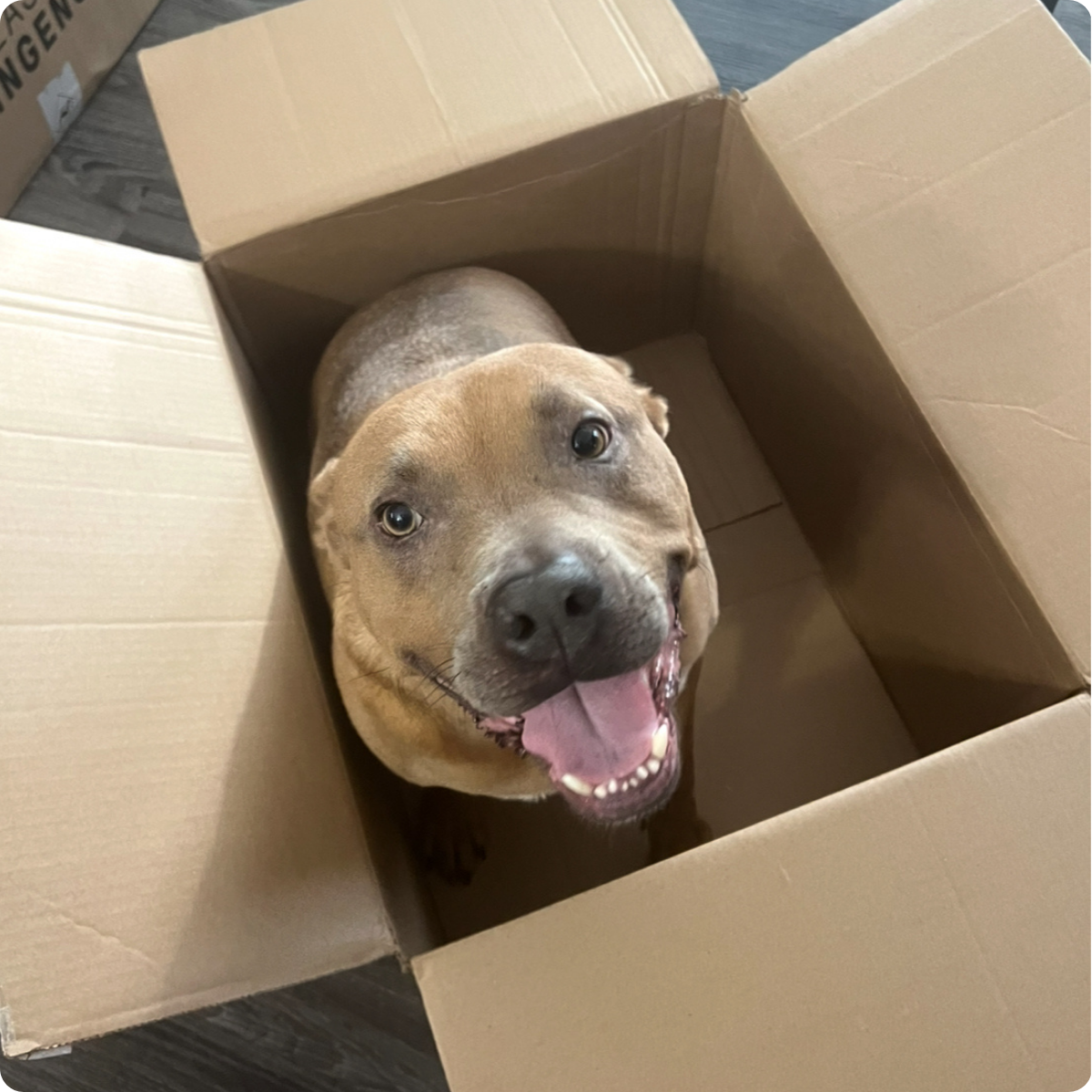
From their perspective, things start to vanish into boxes, strangers might be in and out of the house, and their once-familiar environment suddenly feels unstable. Then, just as they’re adjusting, they’re whisked away to a brand-new space filled with unfamiliar smells, sounds, and routines. Not everyone is as happy about the moving boxes as sweet Russet, pictured.
Animals are deeply routine-oriented. Cats and dogs are also territorial — they rely on the comfort of familiar scents, established boundaries, and predictable schedules. Research shows that major changes in environment are a leading cause of anxiety in pets, sometimes leading to behaviours like hiding, excessive barking, accidents in the house, or even refusing food.
My Own Experience
My Dalmatian, for instance, has had very different reactions to different properties. He’s loved some right away, tolerated one but refused to go up the stairs the entire time we lived there, and now proudly guards the window of our current place like it’s his personal throne.
Pets are resilient, but their personalities and sensitivities mean the adjustment process can look very different from one home to the next.
How to Ease the Transition for Pets
The good news? With a little extra care, you can help your pets settle in smoothly.
- Gradual Acclimation: Start introducing moving boxes slowly so the changes aren’t overwhelming. On moving day, consider sending them to a trusted friend, family member (or “grandpawrents”), or a boarding facility to spare them the chaos. When they arrive at the new place, make sure their essentials (bed, toys, water dish) are already set up to give them an immediate sense of familiarity.
- Maintain Routine: Stick to the same walking, feeding, and play schedule as much as possible. Research shows consistency helps pets regulate stress hormones and feel more secure. Even if everything around them is new, the rhythm of their day stays the same.
- Safe Spaces: In the new home, designate one quiet room as their “base camp” until they feel comfortable exploring more. This helps prevent sensory overload.
- Identification Updates: Moving is a common time when pets slip out and get lost. Update microchips, ID tags, and registration details with your new address right away. (And if you’ve purchased with me, you already know that’s a box I’ll make sure you check off 😉).
- Patience & Positive Reinforcement: Expect some hiccups. Reward calm, confident behavior with praise or treats, and know it may take a few weeks before they truly feel “home.”
Pets And the Selling Process
Pets are also to be considered when preparing to list your home and having it active on the market. Tucking away cat trees and dog beds for photos and showings helps buyers see themselves in the space. Sometimes, depending on the level of shedding (hey, when my dog shakes it’s a snowstorm – I get it!) a professional deep clean prior to listing may mean those with allergies don’t have to hurry through a showing.
The experience of strangers coming through for showings can be quite stressful for pets that are left in the home. We usually recommend that sellers have their pet stay with a trusted friends or family member for the first weekend of listing when we expect most showings may happen.
The Bigger Picture
At the end of the day, our homes aren’t just for us. They’re for the four-legged family members who share them. Just like us, pets crave safety, stability, and comfort. With preparation and empathy, we can make sure the transition isn’t just bearable for them, but successful.
Because when your dog is sprawled happily in the backyard or your cat is snoozing in their favorite sunbeam, that’s when a new house really starts to feel like home.